
The complete guide
Windbreak Netting: How It Actually Works
It seems counter-intuitive, but a solid fence is often a worse windbreak than a permeable mesh screen, and it helps to understand why before you buy one.
Why solid barriers struggle
Wind hitting a completely solid fence or wall has nowhere to go but up and over, which creates strong turbulence and a swirling, gusty pocket on the leeward side, often worse than the open wind you started with. Solid barriers also take the full force of the wind directly, which is why garden walls and solid fence panels are prone to being blown over in storms.
Why density matters on exposed plots
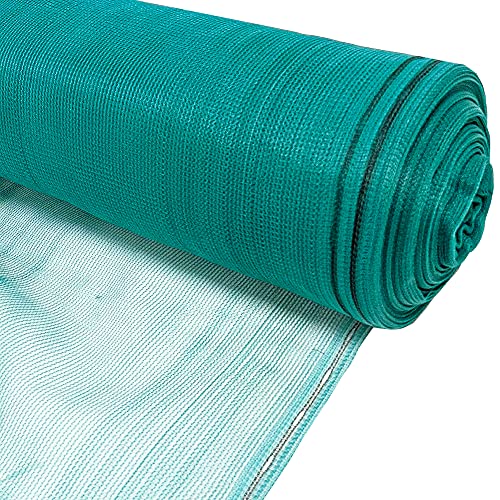
A denser weave, like the 110gsm mesh here compared to a standard 90gsm screen, slows more of the wind passing through while still remaining permeable enough to avoid the turbulence problem of a solid barrier. On an exposed allotment or coastal garden where prevailing wind is a real, ongoing problem, that extra density is often the difference between a windbreak that actually works and one that gets overwhelmed.
Fitting it well
Run dense windbreak mesh along the windward boundary of the plot you want to shelter, fixed taut to posts, an existing fence, or a wire frame. Slack netting flaps, wears out its fixings faster, and is less effective, so check tension periodically through the year, especially after any storms.
A privacy bonus
The same density that slows wind also blocks more of the view through the mesh, so a heavier windbreak like this tends to double as a stronger privacy screen than lighter garden netting, useful on an allotment boundary or overlooked garden edge.