
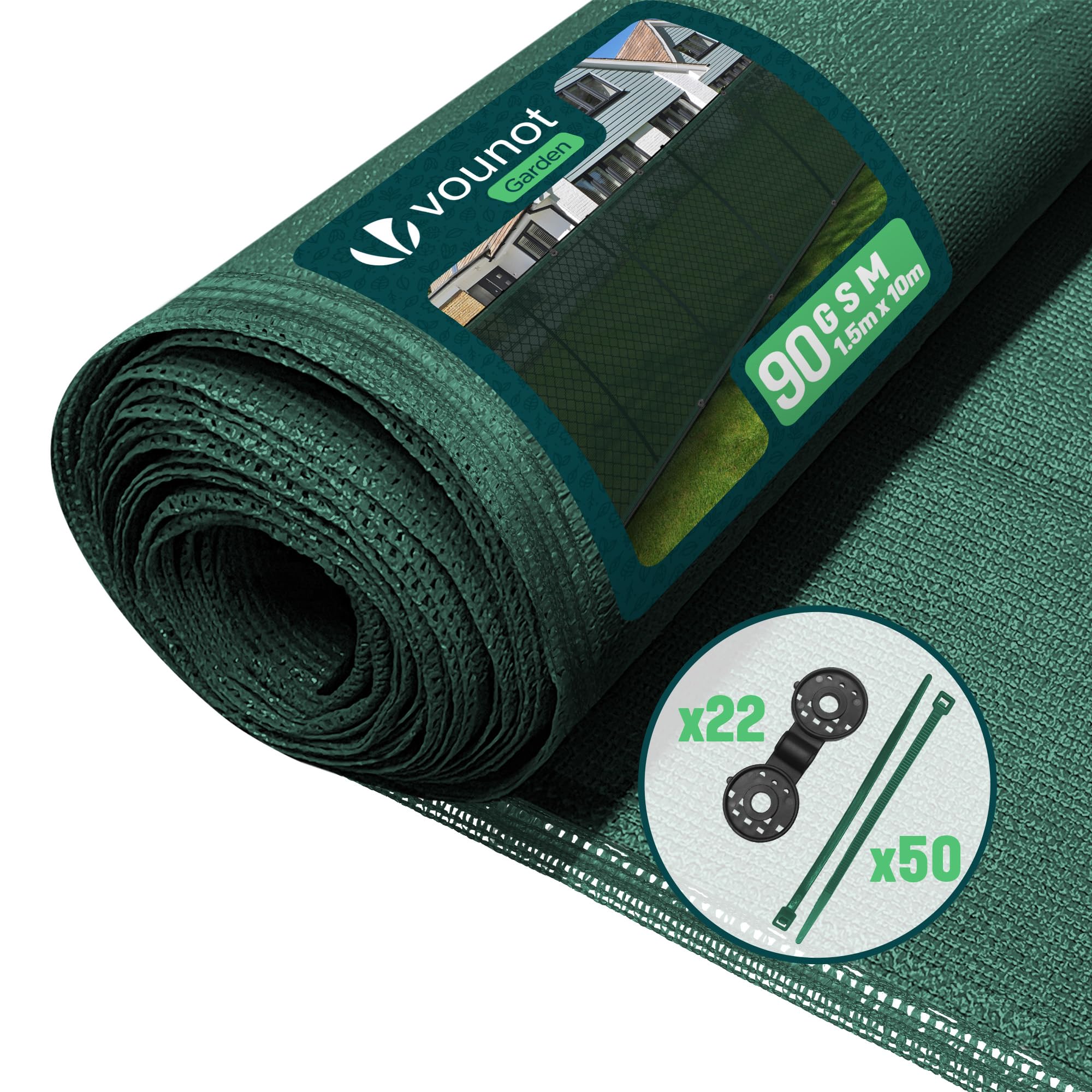
The complete guide
Choosing a Privacy Screening Density
Garden netting comes in a lot of different weights, weaves and colours, and it is easy to buy the wrong one for the job. Here is what actually matters when you are choosing dense privacy netting for blocking sightlines along a fence, balcony or boundary while staying permeable to wind and light.
Start with the job, not the product
Before comparing rolls, be clear on what you actually need solved: shading from sun, exclusion of pests, privacy from neighbours, or wind reduction. Many nets do more than one of these to some degree, but they are usually optimised for one job in particular, and buying on that basis avoids disappointment later.
What this product is built for
This is a tear-resistant, UV-resistant HDPE weave, chosen for blocking sightlines along a fence, balcony or boundary while staying permeable to wind and light. It is not a substitute for a purpose-built shade cloth if heavy sun protection is your main concern, or a dedicated insect mesh if pest exclusion is the priority, but for its intended use it strikes a sensible balance of durability, cost and coverage.
Sizing it correctly
Measure the area you actually need to cover, including a reasonable overlap at the edges for fixing down, before ordering. It is almost always easier to trim a slightly larger net down to size than to try to stretch a too-small piece across a gap.
Fixing it so it lasts
Whatever you are covering, the fixing points are usually where garden netting fails first, from repeated strain, flapping in wind, or UV weakening at a stress point. Space fixings evenly, keep reasonable tension rather than pulling it bar-tight, and check ties periodically through the season.
Getting more than one season out of it
Taking netting down when it is not needed, letting it dry fully, and storing it out of direct sunlight will noticeably extend how many seasons you get from a single roll, regardless of which type you choose.